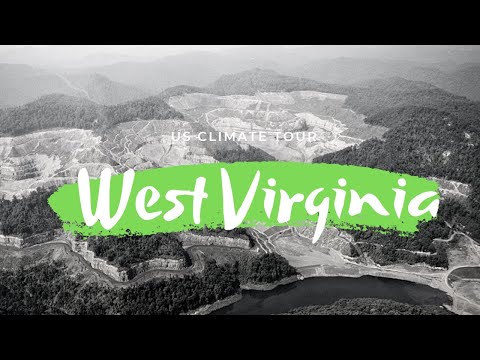
As the United States' third most-forested state, West Virginia is known for its timber and protected woodlands. It's also famous for its salt: Wild buffalo and deer gathered to lick natural salt deposits, and Native Americans and colonists gathered salt to cure butter and preserve meat. West Virginia is the 10th smallest state in the nation by area. Its population in 2025 is 1,766,147, making it the 39th most populated state. It became a state in 1863.
CLIMATE IMPACTS
Temperatures in West Virginia have risen 1 degree (F) over the past century.
- Heat waves are likely to become more intense, and winter and spring precipitation is likely to increase.
- Naturally occurring droughts are projected to become more intense, due to higher temperatures and soil moisture loss during dry spells.
- At the same time, the frequency and intensity of extreme precipitation events is projected to increase, intensifying the threat of flooding.
- Flooding is the costliest and most severe natural hazard for West Virginia. West Virginia is the most flood prone state in the US, with 23 FEMA disaster declarations for flooding between 2010 and 2020.
For more, explore WV Climate Link, an online atlas and tool documenting the effects of changing temperature and precipitation in the state.
ENERGY
The Mountain State is the second largest producer of coal and the fourth-largest energy producer in the country, with large reserves of recoverable coal that have fueled a long history of coal mining. As the world moves away from coal, states like West Virginia are struggling to adapt to job loss in the sector and fear that they will be disproportionately hurt by an energy transition. While 1600 megawatts of coal-fired capacity have retired since 2015, coal fueled 87% of West Virginia’s electricity generation in 2025, and 8 of the state’s ten largest power plants are coal-fired. Natural gas and renewables each accounted for 6% of West Virginia’s total electricity generation. Wind energy produced 4% in 2025, while hydropower produced 2%. There were small contributions from solar and biomass, with the state’s first utility-scale solar facilities coming online in 2024.
CLIMATE PLANS AND LEGISLATION
West Virginia adopted a Renewable Portfolio Standard in 2009 requiring 25% of retail electricity sales from renewables by 2025. However, in 2015 it became the first state in the nation to completely repeal its RPS.
- West Virginia’s Governor Patrick Morrisey (since 2025) currently leads the state with a coal and natural gas energy strategy, focusing on industry and continuing the mining and burning of coal.
- As Attorney General he had led legal challenges against regulations for clean air and clean water, and against the Obama administration’s Clean Power Plan in the landmark Supreme Court case West Virginia v. EPA. The decision in favor of West Virginia limited the EPA’s authority to require coal-fired power plants to shift to renewable energy sources.
- West Virginia participated in the EPA’s Climate Pollution Reduction Grants program, releasing a Priority Energy Action Plan (PEAP) in 2024. The PEAP includes a GHG inventory, GHG reduction measures, and a low-income disadvantaged communities benefits analysis. West Virginia did not have a statewide climate plan before the EPA-funded plan.
ENVIRONMENTAL JUSTICE:
West Virginia’s Attorney General JB McCuskey launched an investigation into the state’s leading environmental groups for “alleged unfair or deceptive acts” in violation of the West Virginia Consumer Credit and Protection Act, issuing subpoenas in September 2026 for financial records and records related to public statements and internal deliberations on West Virginia energy sources and their contributions to climate change. In October 2026, two of the groups, West Virginia Rivers Coalition and 350.org, filed suit to block the subpoenas.