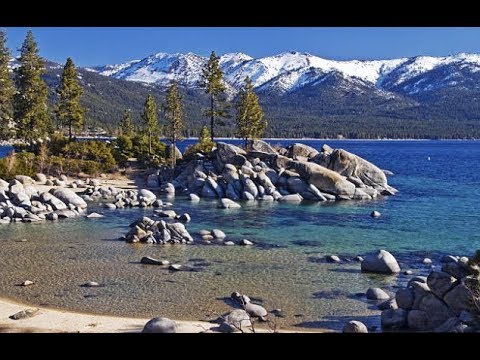
Lakes can form in many ways, but most in the Northern Hemisphere fill the impressions left by glaciers 18,000 years ago, during the last Ice Age. The Great Lakes, which form the world’s largest fresh water system, were created this way. They are open lakes, like all other freshwater lakes, meaning that the water leaves the lake by a river or other outlet. Closed lakes become saline like the Dead Sea and the Great Salt Lake (located in the northern part of Utah and the largest salt water lake in the Western Hemisphere). Only about 0.3% of the Earth’s fresh water is found in the surface water of lakes, rivers, and swamps (with over 68% in ice caps and glaciers and over 30% in ground water).
HOW ARE LAKES AND RIVERS AFFECTED BY CLIMATE CHANGE?
Warmer weather will mean more evaporation from reservoirs and lakes causing increased precipitation in other areas. The Colorado River, for example, already loses 1.8 million acre-feet of water to evaporation every year, which is about 13% of its flow.
As average temperatures rise globally, so does the water temperature, making rivers and lakes increasingly uninhabitable for cold water species.
Altered streamflow, whether it increases during heavy rains or decreases in drought, is also threatening to fish populations, most of which can only survive within a range of conditions. Not only are rivers’ flows changing dramatically in volume, their actual routes are shifting as a result of climate change. Scientists have dubbed this phenomenon “river piracy,” which refers to one river capturing and redirecting the flow of another. This process would usually take thousands of years, but it happened to the Yukon River (close to 2,000 miles long) over the course of a few months in 2016. While that event was particularly dramatic, scientists predict that such remapping of river routes will become more common as glaciers continue to melt.
And, finally, a warmer upper layer also creates dead zones, because it slows down air exchange and leads to less oxygen in the water. Dead zones can produce toxic algae, foul drinking water, and massive fish kills.
Many communities will see their water supplies shrink as temperatures rise and precipitation patterns shift. A rise in severe storms will degrade water quality and increase the risk of catastrophic floods. These shifts will have dramatic impacts, threatening public health, weakening economies and decreasing the quality of life in many places.
A LITTLE MORE ON FLOODING
Globally, river flooding is expected to displace 50 million people a year by 2100. In the US, the average 100-year floodplain is projected to increase 45% by the year 2100, while the annual damages from flooding are predicted to increase by $750 million.
WHAT ABOUT WETLANDS?
Wetlands are a critical natural tool for mitigating climate change, yet they are disappearing three times faster than forests. According to the IPCC, in the last 100 years almost half of wetlands have been lost due to drainage and climate change effects such as sea level rise, warming and extreme weather.
A highly biodiverse ecosystem, wetlands provide critical habitat for animals, sustain local communities, and their ecosystem services protect against climate change effects. They absorb excess water, helping to mitigate impacts of floods and heavy rain, help to purify water, and act as storm shields and crucial carbon sinks. Wetlands store more carbon than any other ecosystem on the planet.
WHAT CAN BE DONE?
By reducing stormwater runoff and protecting floodplains, green infrastructure can help manage both localized and riverine floods. In areas impacted by localized flooding, green infrastructure practices absorb rainfall, preventing water from overwhelming pipe networks and pooling in streets or basements. Green infrastructure practices that enhance infiltration include rain gardens, bioswales, and permeable pavements. In areas impacted by riverine flooding, green infrastructure, open space preservation, and floodplain management can all complement gray infrastructure approaches. These practices reduce the volume of stormwater that flows into streams and rivers, protecting the natural function of floodplains, and reducing the damage to infrastructure and property.
IN CONCLUSION
Like all other parts of the natural world, climate change will affect rivers, lakes, marshes and wetlands, from the micro to the macro levels, destabilizing the plethora of life forms that rely on their once-consistent patterns.