Indigenous People

INDIGENOUS PEOPLE

Indigenous peoples’ general worldview is to live in harmony with nature, and to steward and preserve their land. Native Americans did just this — preserving their natural landscape for 14,000 years until the European settlers came and cleared much of the land.

The cultural legacy, wellbeing, and way of life of the 567 federally recognized tribal groups in the U.S., composed mainly of American Indian peoples and Alaska Native peoples, are currently disproportionately threatened by a number of climate-related issues while leaving the lowest ecological imprint.

How does climate change affect their way of life?

In many indigenous households, anywhere from 60 to 80% of households depend on wildlife for food. As a result, when climate changes the land where they live, that becomes compromised.

  • In Alaska, for example – where 40% of American tribes live - “the distribution, quality, thickness, and timing of ice on the ocean, lakes, and rivers drive nearly every aspect” of their life, says a recent NOAA report, “from boating to whaling and seal hunting to the safety of fishing and foraging.” The report details a major loss of sea ice in Alaska’s Bering Sea — that has led to dying wildlife, food scarcity, and animal migration — profoundly affecting over 70 local indigenous communities.
  • In Louisiana, sea-level rise and coastal erosion are drowning burial sites and threatening coastal Louisiana indigenous people’s food sources.
  • In northern Arizona, the Hopi tribesmen have seen their traditional indigenous farming practices fail in the face of climate change disrupting their age-old weather forecasting. Dependent in many cases on millennia-old trial and error, their fields are now withering as the conditions on which the calendars are predicated change. Without that accumulated wisdom to fall back on—bird migrations, wind direction, stars, and more—farmers are feeling particularly defenseless just as other consequences of climate change complicate their lives.

Native Americans are doing battle on other fronts too, pipeline projects crossing their lands, for example and water rights. Some battles are lost. Some are won. Others are still in court.

  • Originally constructed in 1953 by the Canadian company Enbridge, The Line 5 Pipeline runs 645 miles from western Canada to eastern Canada, passing through northern Wisconsin and  Michigan under the Straits of Mackinac. On June 16, 2023, a federal judge gave Enbridge 3 years to close the section of the pipeline (12 miles) that crosses reservation land in northern Wisconsin, in response to a lawsuit filed in 2019 by the Bad River Band tribe. The judge also ordered compensation to be paid. As of December 2025, litigation is ongoing between the Bad River Band tribe and Enbridge on a proposed reroute of the Line 5 Pipeline. 
  • First built in the 1960s, The Line 3 Pipeline starts in Alberta, Canada, and comes to a stop in Superior, Wisconsin. It runs through land (the 337-mile segment across Minnesota) which, in the 1800s, was ceded by Indigenous groups to the U.S. under the condition that they're guaranteed the right to hunt, fish, and gather wild rice. Activists say the pipeline infringes on those rights, worsens climate change and risks spills in waters where they harvest wild rice. After years of protests and legal battles, the pipeline turned on in October of 2021. Opponents have challenged the pipeline's permits in court to no avail so far. They've also unsuccessfully sought to persuade Biden to intervene.
  • The takedown of Keystone XL Pipeline will, however, go down as one of this generation’s most monumental environmental victories. After more than ten years of protests and legal battles, it was officially abandoned in the summer of 2021 after Biden denied a key permit on his first day in office. 
  • The Dakota Access Pipeline is still provoking protracted protests from the Standing Rock Sioux Tribe, as they bring attention to the potential contamination of water supplies from oil spills and the vandalizing of sacred sites. The pipeline still, in November 2025, lacks a key permit from the Corps to cross under Lake Oahe in South Dakota. The U.S. Army Corps finally published the court-ordered draft environmental impact statement in September 2023. In October 2024, the Standing Rock Sioux Tribe filed a lawsuit against the Corps alleging that operating the pipeline without the easement violates the National Environmental Policy Act and the National Historic Preservation Act. The litigation is still ongoing. 
  • The 303-mile-long fracked gas Mountain Valley Pipeline from West Virginia to Virginia was approved in the recently passed debt limit deal (Spring, 2023) but a federal court in Richmond halted construction on July 11, 2023, setting off a battle with Congress that ended up at the Supreme Court who agreed on July 27 that Congress had, indeed greenlighted the project as part of a behind-the-scenes deal to raise the nation’s debt ceiling. A separate but related pipeline, the proposed MVP Southgate Project, plans to extend to North Carolina cutting through the Jefferson National Forest and crossing hundreds of waterways and wetlands jeopardizing Indigenous communities, particularly the ancestral lands of the Occaneechi. Construction is set to start next year and locals are concerned. 
  • Leaders of tribes are pushing for more involvement in the negotiations taking place concerning the over-tapped Colorado River, saying they want to be at the table in the discussions among the federal government and the seven states that rely on the river. The 30 tribes in the Colorado River Basin have rights to use roughly one-fourth of the river’s average supply. The Interior Department on June 15 initiated the process of developing new long-term rules for operating reservoirs and apportioning water cuts during shortages. New rules will need to be in place by the end of 2026, when the current 2007 guidelines expire.

Native American tribes are developing and implementing climate adaptation plans. At least 50 tribes have created plans which are available in a database via the Tribal Climate Change Project. And, with tribes controlling over 50 million combined acres nationally, these climate plans could be a crucial resource for their uniquely deep ecological knowledge and community-based approach.

INDIGENOUS-LED PROTESTS AT COP30: 

Thousands marched in an Indigenous-led climate protest during the second week of COP30, the UN’s latest climate summit hosted in Belém, Brazil in November 2025. It was the first major protest at a COP in four years. The Great People’s March was just one of many Indigenous-led demonstrations during the summit. Earlier that week, almost 100 people from the Munduruku Indigenous group led a peaceful protest blocking the entrance to the COP30 venue, demanding a prioritization of climate justice in the talks. A People’s Summit was held in parallel with COP30, and the People’s Summit Flotilla featured 200 vessels calling for a centering of Indigenous knowledge, practices, and land rights in climate talks. 

While Brazil’s Ministry of Indigenous Peoples had invited 360 Indigenous leaders to participate in COP negotiations - “the largest Indigenous participation in the history of UN Climate Conferences,” according to the COP30 website - many felt that tokenized participation will not solve the structural issues of the conference itself, where one in every 25 participants was a fossil fuel lobbyist. As Peter Genderloos writes, “this farce is getting in the way of actual, active strategies to protect Indigenous peoples and address the ecocide.” 

As Diana Chavez said in the COP30 closing statement by the International Indigenous Peoples Caucus, “Even at the ‘Indigenous COP’ we have been excluded… There can be no just transition if our territories remain sacrifice zones.”

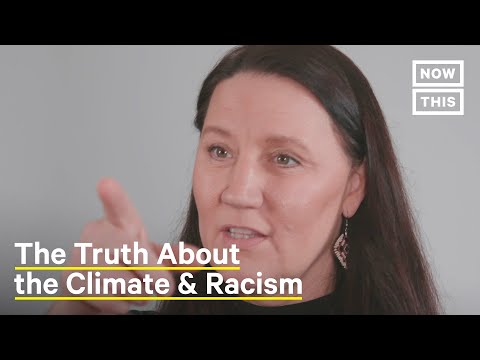
Why All Americans Should Care About 'Environmental Racism’ | NowThis

CREDIT: NOW THIS

CURRENT NEWS

Pipeline Propagandists Targeted Standing Rock’s Neighbors; Then Came a Data Center

By Alleen Brown 10/16/26
The pipeline giant Energy Transfer paid a mercenary security firm to use Facebook to fuel divisions between an Indigenous-led movement and its mostly white, rural neighbors. Personnel working for the private security contractor TigerSwan described…
Read more

Coeur d’Alene Tribe works to restore native prairie

10/14/26
One hundred and fifty years ago, areas of eastern Washington and Idaho were blanketed in perennial grasses, wildflowers, and native shrubs.
Read more

These ingenious fishponds fed Hawaiians before colonialism

10/13/26
Hawaii imports almost 90% of its food, so if a climate disaster or fuel shortage disrupts shipping, the islands are vulnerable to food shortages.
Read more

Standing Rock Sioux Tribe files lawsuit to shut down Dakota Access Pipeline

By Jack Dura 10/09/26
The Standing Rock Sioux Tribe on Friday filed a new lawsuit to try to shut down the Dakota Access oil pipeline, continuing a decadelong battle over the project.
Read more

California to Vote on Landmark Tribal Petitions for Coastal Protections

By Claire Barber 10/02/26
Drive the Pacific Coast Highway, spearfish alongside Great White sharks, surf in Santa Cruz, dive for lobster, cast a line or set a crab pot: California is defined by its 840-mile coastline. Managing the miles…
Read more

New Trump Rules Would Limit State Power to Block Pipelines, Energy Projects

By Marianne Lavelle 09/03/26
When the Trump administration last fall unveiled its cornerstone policy for carrying out the Clean Water Act—new language spelling out the reach of the Environmental Protection Agency’s authority—it said one of its goals was to…
Read more

Biologos’ Jim Stump on beauty and danger in the Arctic

By Katherine Hayhoe 08/13/26
This week, I’m handing the newsletter over to my colleague and friend Jim Stump from BioLogos. It’s a nonprofit originally founded by Francis Collins, former head of the U.S. National Institutes of Health, that helps…
Read more

‘The Earth itself was screaming out:’ Bay Mills Indian Community fights pipeline permitting while enveloped in wildfire smoke

By Samantha Harrington 08/10/26
Whitney Gravelle spent July 15, 2026, trying to clear wildfire smoke out of tribal buildings, constructing homemade air purifiers from filters and box fans, and checking on community members with asthma and heart disease. Gravelle…
Read more

Inside the Grassroots Revolt Against Carbon Capture Pipelines

By Taylor Noakes 08/05/26
Dr. Amil Shapka was having a quiet day in the rural Alberta community of St. Paul when a worried neighbour showed up at his doorstep. The man, a senior citizen, had been approached by agents…
Read more

The Line 5 Oil Pipeline is Threatening the Great Lakes — But We Just Got a Big Win Against It

By Earthjustice 08/03/26
A battle is raging to protect the largest surface freshwater system in the world. The Great Lakes are a defining cultural and ecological anchor for the Midwest, supplying drinking water for up to 40 million…
Read more

Tell the Bureau of Land Management: Maintain protections for Chaco Canyon

07/30/26
Chaco Canyon is an irreplaceable cultural landscape, home to thousands of archaeological sites, important wildlife habitat and internationally recognized dark skies. Opening the surrounding public lands to new oil and gas leasing and mining could…
Read more

Menominee Nation elders are getting solar and battery systems

07/28/26
In Wisconsin, the Menominee Nation is installing solar panels and battery systems at the homes of tribal elders.
Read more

KEY RESOURCES

A Report From The National Tribal Air Association And Moms Clean Air Force

08/11/21
The total numberof Indigenous people in the United States is between 2.5 and 6 million, of which 20% live on Tribal lands or in Alaska Native villages. There are 574 federally recognized Tribes, but this…

Addressing Links Between Climate and Public Health in Alaska Native Villages

08/11/21
As emissions of heat-trapping bases accumulate in our atmosphere, Earth's polar regions are warming more quickly than at lower latitudes. The rapid environmental changes that result from this warming can have a significant impact on…

Decolonize climate adaptation research

06/23/21
Climate-forced population displacement is among the greatest human rights issues of our time, presenting unprecedented challenges to communities and the governments responsible for protecting them. Sea level rise, heat, drought, and wildfires will cause people…

Climate Change

05/11/21
The Intergovernmental Panel on Climate Change found that Indigenous peoples of North America are disproportionately vulnerable to climate change. The most vulnerable industries, settlements, and societies are generally those in coastal and river flood plains;…

Climate Change and the Health of Indigenous Populations

05/11/21
Understanding the threats that climate change poses to human health can help us work together to lower risks and be prepared. Climate change threatens human health, including mental health, and access to clean air, safe…

Climate change threatens traditional ways of life

05/11/21
Climate change threatens indigenous peoples’ livelihoods and economies. Its impacts are projected to be especially severe for many of the 567 federally recognized tribes in the United States that depend on traditional places, foods, and…

Climate Change and Indigenous Peoples: A Synthesis of Current Impacts and Experiences

05/11/21
In accordance with Federal civil rights law and U.S. Department of Agriculture (USDA) civil rights regulations and policies, the USDA, its Agencies, offices, and employees, and institutions participating in or administering USDA programs are prohibited…

Climate Change Vulnerability of the Pyramid Lake Paiute Tribe in the Southwest

05/11/21
Native Americans are one of the most vulnerable populations to climate change in the United States because of their reliance upon the natural environment for food, livelihood, and cultural traditions. In the Southwest, where the…

OnePlanet

01/03/20
To partner with indigenous and traditional communities to build a more sustainable, empowered, and just future through community-based projects, outreach, and technical assistance.

Indigenous Environmental Network

12/23/19
Established in 1990 within the United States, IEN was formed by grassroots Indigenous peoples and individuals to address environmental and economic justice issues (EJ). IEN’s activities include building the capacity of Indigenous communities and tribal…

MORE NEWS

Indigenous Activist Sherri Mitchell is Fighting For Environmental Justice

By NowThis   01/17/20  
Sherri Mitchell is an Indigenous rights lawyer and activist who has fought for environmental justice for more than 25 years. Mitchell was born and raised in the Penobscot Nation, a federally-recognized native tribe in Maine,…
Read more

Brazil’s Indigenous Communities Resist Jair Bolsonaro

By Deutsche Welle   01/17/20  
Rarely has something so precious fallen into such unsafe hands. Since Jair Bolsonaro took the Brazilian presidency in 2019, the Amazon, which makes up 10 percent of our planet's biodiversity and absorbs an estimated 5…
Read more

How Australia’s Indigenous Experts Could Help Deal With Devastating Wildfires

By Aarti Betigeri   01/14/20  
Australia has always had bushfires, the result of being the driest inhabited continent on earth combined with high temperatures. Its indigenous people, who predate European colonization by some 40,000 years, learned to manage and mitigate…
Read more

First all-Indigenous NSW firefighting crews protecting sacred sites, remote communities

By Jessie Davies   01/12/20  
For the first time in the state's history, the NSW Rural Fire Service has created two all-Indigenous firefighting crews.
Read more

What indigenous design could teach us about surviving climate change

By Evan Nicole Brown   01/10/20  
Australia’s wildfires—which, since September, have burned 17.9 million acres of the continent—have not only turned skies vermillion and made breathing the air a health hazard, they have also claimed the lives of an estimated 27…
Read more

Why Indigenous Youth Were 2019’s Climate Warriors

By Yessenia Funes   12/27/19  
If there was any year to honor the youth, 2019 sure as hell would be it. Around the world this year, young people took to the streets and demanded their governments take action to address…
Read more

Young Indigenous activists lead climate justice action in Alaska

By Tripp J Crouse   12/20/19  
Two Alaska Native teenagers pushed for a resolution declaring a climate emergency – and decision-makers listened.
Read more

The Disproportionate Impact of Climate Change on Indigenous Communities

By Paige Bardolph   12/19/19  
The case studies, images, and content for this article are drawn from the exhibition "Climate Stories," curated by the author and on view at the Global Museum at San Francisco State University through May 22,…
Read more

Too hot for humans? First Nations people fear becoming Australia’s first climate refugees

By Lorena Allam and Nick Evershed   12/18/19  
As the big dry bites and temperature records tumble, Aboriginal people in Alice Springs say global heating threatens their culture and very survival.
Read more

Young indigenous activists are leading on climate justice in Alaska

By Tripp J Crouse   12/18/19  
“We do not want to stop our ways of life. That’s why we’re here.” Seventeen-year-old Quannah Chasing Horse’s voice broke as she stood on stage in front of a sea of delegates at the Alaska…
Read more

‘We Fear for Our Children:’ Alaska Natives Speak out in Climate Change Report

By Maddie Stone   12/11/19  
For the first time, NOAA's annual report on the devastating effects of climate change in the Arctic is highlighting the unsettling changes to the lives of the people who live there.
Read more

How indigenous peoples can help the world meet its climate goals

By Julia Rosen   11/05/19  
The first time Mandy Gull visited Canada’s Broadback Forest, she was struck by the displays of delicate lichen. By the dense, ancient trees. By the moss-covered floor, which rose and fell like a rumpled green…
Read more

Greta and Tokata at the Front Lines

By Talli Nauman & Tatyana Novikova   10/08/19  
On a world tour for climate justice, Swedish teen activist Greta Thunberg visited Native America Oct. 6-8, attracting a gymnasium full of enthusiasts at Pine Ridge Indian Reservation, leading a march on Rapid City Hall…
Read more

This Teen Climate Activist Is Fighting To Ensure Indigenous And Marginalized Voices Are Being Heard

By Anna Lucente Sterling   09/25/19  
Xiye Bastida has experienced the global effects of climate change firsthand. Now, she’s working to bring diverse people together to fight it. ...
Read more

Indigenous people are already working “green jobs”

By Nick Estes   09/24/19  
From Standing Rock to the Unist’ot’en Camp, land defense and water protection are necessary for the continuation of life on a planet teetering on collapse....
Read more

The Tribe that Brought a Damaged Shoreline Back to Life

By Anuradha Varanasi   09/18/19  
On a sunny Monday afternoon in August, the Shinnecock Indian Reservation’s beach in Long Island, New York, resembled one of the postcard-perfect beaches in the nearby Hamptons. Except, there weren’t any sunbathing tourists around. The…
Read more

American Climate Rebels Episode 2 – Minnesota: Stop Line 3

04/21/19  
Enbridge have received the go-ahead to build a replacement - actually a brand new - pipeline through Minnesota to shift tar sands oil out of the USA, hoping to make as much money as possible…
Read more

Indigenous rights: the pathway to a livable planet

By Nicole DeSantis   03/21/19  
Today is International Day of Forests, a perfect time to recognize the essential role of healthy forests in achieving the Sustainable Development Goals, including securing livelihoods, providing clean water, protecting biodiversity and meeting our climate…
Read more

European colonization of Americas killed so many it cooled Earth’s climate

By Oliver Milman   01/31/19  
Research finds killing of native people indirectly contributed to a colder period by causing deaths of around 56 million by 1600.
Read more

Report: Alaska Native communities will face the brunt of climate change

By Krysti Shallenberger   11/30/18  
Jones is also the CEO of Quinhagak’s Qanirtuuq Corporation. The community is trying to save artifacts from an ancient village nearby because they feared their heritage would wash out to the sea from erosion, caused…
Read more

Native Americans Sue Frackers Over Manmade Earthquakes

By Ross Kenneth Urken   07/06/17  
Oklahoma has become one of the world’s most notorious earthquake hubs. In fact, in 2014 for the first time, the number of magnitude 3 or greater quakes in the state surpassed California’s total.
Read more